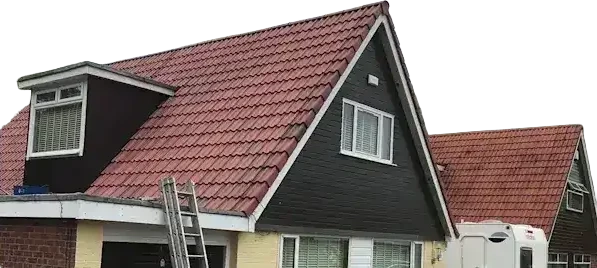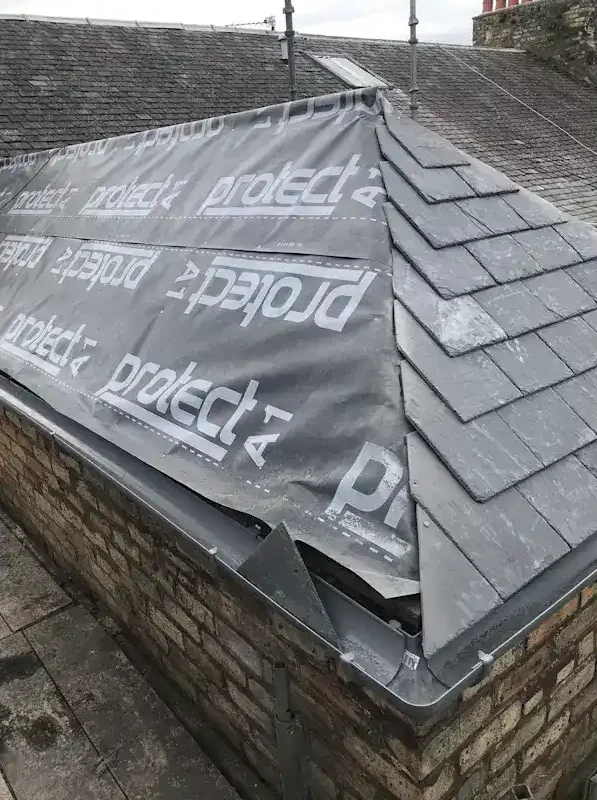
Finding water coming through your ceiling or a new damp patch on a wall is a fairly clear sign that something needs attention. What is often less obvious is where the water is actually getting in.
A roof leak does not always appear directly below the damaged part of the roof. Once rainwater gets underneath the roof covering, it can travel along timber, roofing felt or other surfaces before eventually appearing inside the house. A damp patch in one room could therefore be caused by a problem several metres away.
If you have noticed signs of a leaking roof in Kilmarnock, the sensible approach is to have the source identified before the damage gets worse. Many leaks can be dealt with through a specific repair. Leaving water to continue entering the property can turn a smaller roofing problem into damaged ceilings, internal decoration or roof timbers.
Here are some of the problems a roofer will typically look for when investigating where water is getting into a property.
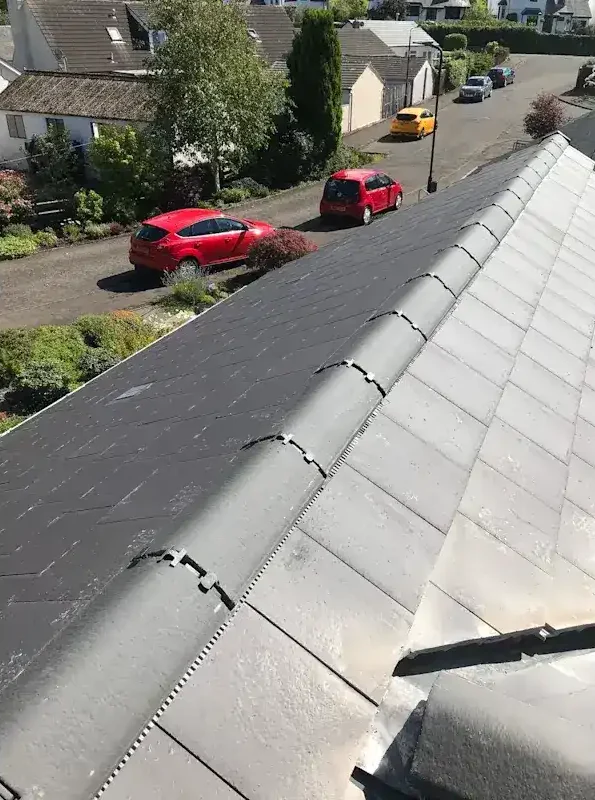
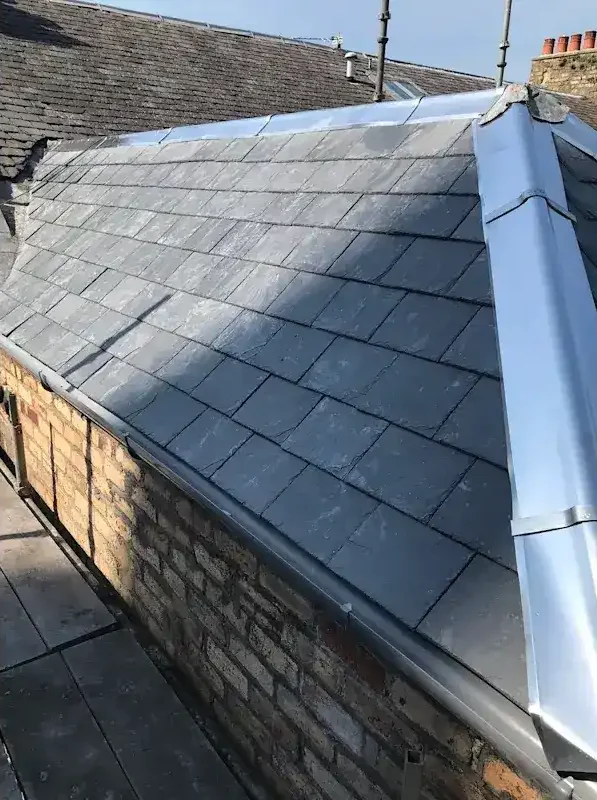
Missing or Slipped Slates
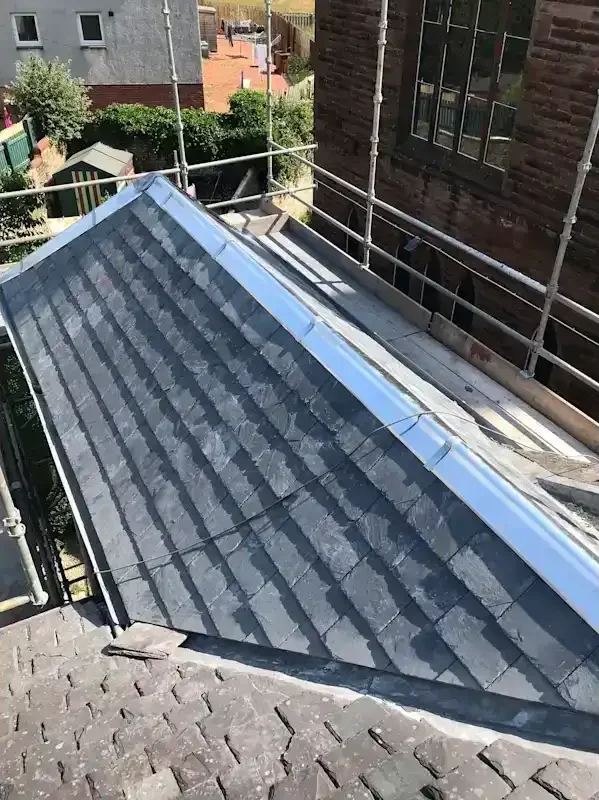
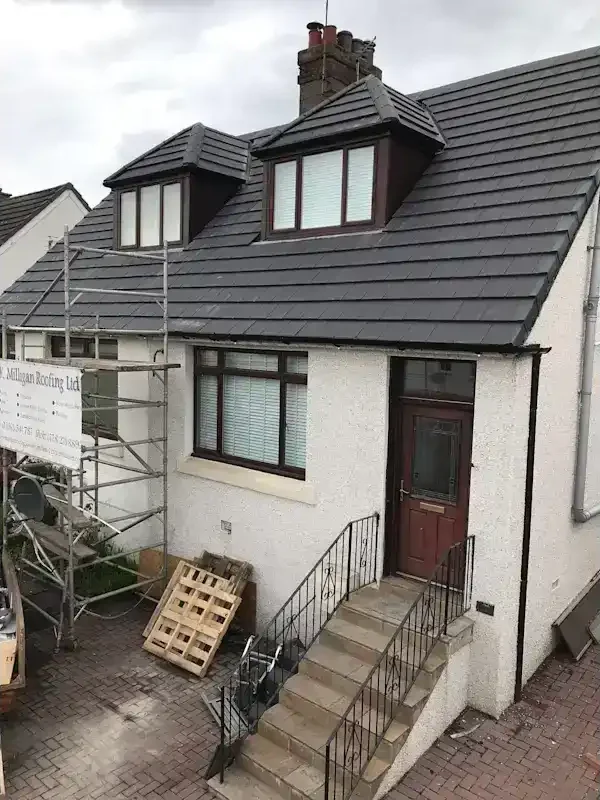
A missing or slipped slate can leave part of the roof underneath exposed to rain.
Sometimes the problem is quite easy to spot from the ground. You might see a gap where a slate should be, notice that one is sitting at a different angle from those around it, or find a fallen slate on the ground outside the property.
Other times, the damage is much less obvious. A slate can crack or move without completely coming away from the roof.
If you can see something that looks wrong, there is no need to try to inspect it more closely yourself. Do not use a ladder or climb onto the roof. A roofer can safely inspect the area and establish whether a slate has moved, broken or needs replacing, as well as checking whether anything underneath has been damaged.
Broken or Damaged Roof Tiles
Roof tiles can also crack, break or become displaced. Once that happens, rainwater may be able to get underneath the normal roof covering.
A badly broken tile might be visible from outside, but smaller cracks and movement can be difficult to see from ground level. The position where water appears inside the property may not make the damaged tile obvious either.
This is one reason simply looking at the damp patch is rarely enough to diagnose a roof leak. The roof covering and the area around the suspected point of entry need to be checked properly.
Water Getting In Around a Chimney
If a leak appears near a chimney breast or in the ceiling close to a chimney, the problem may be with the flashing.
Flashing is the waterproof material fitted where the chimney meets the roof. Lead is commonly used for this. Its job is to stop rainwater getting through the joint between the chimney and the surrounding roof covering.
If the flashing becomes loose, cracked, damaged or starts to pull away, water can find a route into the roof.
There can also be other causes of water getting in around a chimney, so the location of the damp patch alone does not prove that the flashing is at fault. A roofer will normally inspect the flashing, surrounding slates or tiles and the condition of the chimney area before deciding what needs repairing.
Problems With Roof Valleys
Some pitched roofs have areas where two sections of roof meet and form an internal channel. This is known as a roof valley.
The valley is designed to collect rainwater from both sides of the roof and carry it down towards the guttering. Because a considerable amount of water can pass through this relatively narrow area, a problem here can lead to water entering the roof.
Damage to the valley itself, deterioration of the materials around it or debris interfering with the normal flow of water can all cause problems.
Valleys are not areas a homeowner should attempt to inspect by climbing onto the roof. If the position of a leak suggests that a valley may be involved, it needs to be checked safely by a roofer.
Flat Roof Leaks
A flat roof leak can have several possible causes.
The roof covering may have split or become damaged, a joint may have failed, or there may be a problem around an edge or another point where different materials meet. Water collecting on part of the roof rather than draining away correctly can also indicate that something needs investigating.
The age of a flat roof on its own does not tell you whether it needs replacing.
Depending on the type of roof and its overall condition, a localised problem may be repairable. The important part is finding where the water is entering and checking the condition of the surrounding roof before deciding whether a repair or more extensive work is justified.
Could It Actually Be the Guttering?
Not every damp patch close to a roof is caused by a failure of the roof covering.
Blocked or damaged guttering can allow rainwater to overflow rather than being carried safely to the downpipe. A leaking gutter joint can have a similar effect. Water may then run down the outside of the building or reach areas it would not normally come into contact with.
Depending on where this happens, dampness can eventually become visible inside.
A downpipe that is blocked, damaged or leaking can cause problems too.
This is why identifying the source matters. Replacing a slate will not solve the problem if the water is actually coming from overflowing guttering, just as repairing a gutter will not solve a leak caused by damaged flashing around a chimney.
What Can You Safely Check Yourself?
There are a few useful observations you can make without using a ladder or getting onto the roof.
From ground level, look to see whether there are any obvious gaps in the slates or tiles. You may also notice a slate or piece of tile that has fallen onto the ground.
If it is raining, see whether water is overflowing from the guttering or running down an outside wall where it normally would not. Do this from a safe position inside the property or at ground level.
Inside, check whether the damp patch is changing. If you have safe, normal access to your loft without using a ladder to reach it, you may be able to see staining, damp timber or signs of water. There is no need to touch damaged areas or move around parts of a loft that are not properly boarded.
It can also help to make a note of when the leak appears. For example, does it happen during every period of rain, only during heavier rain, or when rain is being driven towards a particular side of the house?
Take photographs of any visible internal damage and anything you can clearly see from ground level. These can be useful when explaining the problem to one of our roofers.
Do not climb onto the roof or use a ladder to investigate a leak. A wet or damaged roof is not a safe place for a homeowner to try to diagnose the problem. If something cannot be checked safely from ground level or from an ordinarily accessible part of the house, leave it for our roofers to inspect.
Is a Leaking Roof Urgent?
It depends on the amount of water entering the property and what has caused it, but a leak should not simply be left to see what happens.
If water is actively coming into the house, a slate or tile has fallen from the roof, or there is obvious damage following bad weather, contact a roofer.
The same applies if a damp patch is becoming larger, the leak keeps returning, or you cannot work out where the water is entering.
Water around electrical fittings, such as ceiling lights, needs particular care. Do not touch a wet fitting or attempt to investigate the area yourself. Keep away from the affected area and seek appropriate professional assistance.
When Should You Call a Roofer?
You should arrange a roofing inspection if:
– Water is actively entering the property.
– A slate or tile has fallen or is visibly out of position.
– There is visible damage to the roof.
– A damp patch on a ceiling or wall is getting larger.
– Water appears to be getting in around a chimney or roof valley.
– The source of the leak is not obvious.
– A previous repair has not stopped the problem.
– The leak disappears and then returns during later rainfall.
Calling a roofing company, such as W.Milligan Roofing, does not mean you are committing to having the whole roof replaced.
The first job is to establish where the water is entering. A proper inspection should identify the likely cause, check the condition of the surrounding area and determine what repair is actually required.
If you are in Kilmarnock or the surrounding area and need somebody to investigate the problem, our roof repairs in Kilmarnock service covers leaking roofs, damaged slates and tiles, chimney and flashing problems, flat roof leaks and other localised roof repairs.
What Will a Roofer Look For?
The inspection will depend on the property and where the water has appeared, rather than following the same checklist for every leak.
The roofer may need to examine the slates or tiles, flashing around chimneys, roof valleys, flat roof coverings, guttering and other points where different parts of the roof meet.
They will also look for signs that help trace the route the water has taken. That matters because the visible damp inside the house may only be the end point of the leak, not where the rain originally entered.
Once the source has been found, it should be possible to explain what has failed and what work is needed to put it right.
A Roof Leak Does Not Automatically Mean a New Roof
If you have water coming through the roof, the first question should be “where is it getting in?”, not “does the whole roof need replacing?”
A slipped slate, broken tile, failed section of flashing, damaged valley or localised flat roof problem may only require repair to the affected area. The condition of the rest of the roof needs to be considered before recommending anything more extensive.
If you have found a leak or damp patch in your property, contact W Milligan Roofing or visit our contact page to arrange an a free inspection and recommendation.